🔬 Research
AI-driven Tumor State Science
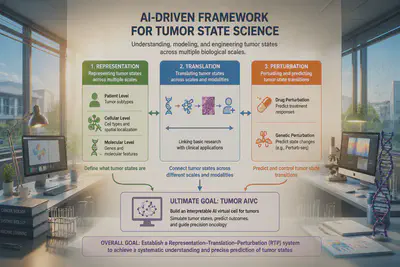
Cancer is a dynamic, multi-scale, and multi-modal system. Our laboratory aims to establish an AI-driven framework to understand, model, and engineer tumor states. By integrating artificial intelligence with systems biology, we develop interpretable computational approaches to represent tumor states, translate biological information across scales, and predict state transitions induced by genetic and therapeutic perturbations.
Our long-term vision is to build a Tumor AI Virtual Cell (AIVC)—an intelligent model capable of understanding tumor states, simulating tumor evolution, and guiding precision oncology.
1. Tumor State Representation
Decoding the fundamental states of tumors
Tumors are not defined solely by genetic alterations or molecular subtypes, but by complex and dynamic cellular states emerging across multiple biological scales. We develop interpretable AI models to construct unified representations of tumor states from molecular, cellular, spatial, and functional perspectives.
Representative Works
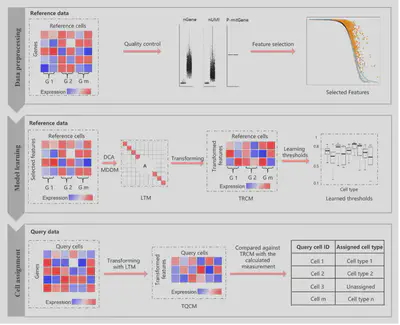
scLearn (Science Advances, 2020)
Developed machine learning approaches for single-cell representation learning and characterization of cellular heterogeneity.
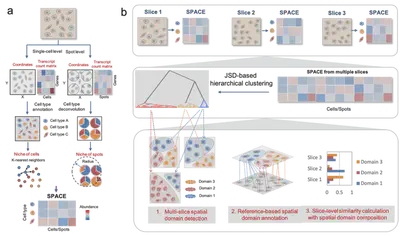
SpaDo (Genome Biology, 2024)
Developed spatial transcriptomic modeling approaches to characterize spatially organized cellular states and tumor ecosystems.
2. Tumor State Translation
Connecting biological states across scales and modalities
A major challenge in cancer research is how to translate biological information between experimental systems, molecular layers, spatial contexts, and clinical outcomes. We develop AI-driven frameworks to establish cross-scale and cross-modal mappings that bridge basic discoveries and clinical applications.
Representative Work
SpaPheno (Genome Medicine, 2026)
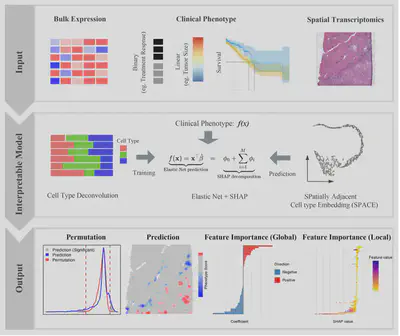
Developed an interpretable AI framework that connects spatial tumor states with clinical phenotypes, enabling the translation of molecular spatial patterns into patient-level outcomes.
3. Tumor State Perturbation
Predicting and designing tumor state transitions
Understanding cancer requires not only describing tumor states, but also predicting how these states change in response to genetic and therapeutic interventions. We develop AI models to characterize perturbation-induced state transitions and identify principles governing tumor response.
Representative Works
MUSIC (Nature Communications, 2019)
Developed computational approaches for modeling genetic perturbation effects and linking perturbations to cellular phenotypic changes.
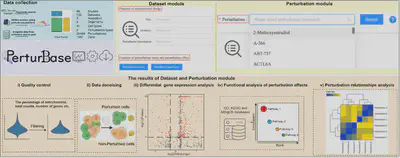
PerturBase (Nucleic Acids Research, 2025)
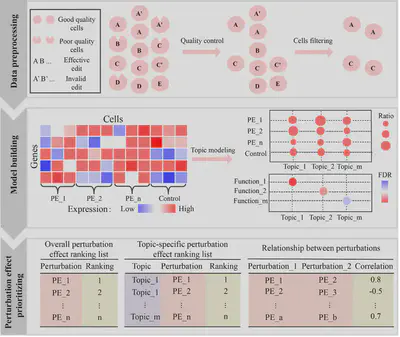
Developed a systematic framework and database for integrating and interpreting perturbation data to understand gene function and cellular state regulation.